Best Wildflowers to Sow for Bees in a Small UK Garden
A small garden can feed far more bees than most people expect. Honeybees, bumblebees and the UK's many solitary bee species do not need a meadow; they need a steady supply of nectar and pollen within flying distance, offered in weather they can actually fly in. Two or three pots on a sunny patio, a metre of border along a south-facing wall or a single window box can carry insects from February through to October — provided you choose species that flower in succession and leave the flowers open enough to reach.
What follows is a workable planting plan for a modest space, using British native and naturalised wildflowers that cope with containers, plus a few honest notes on what does not earn its place.
What bees actually need from a flower
Bees are not decorative. They are collecting protein and sugar, and they are particular about access. Double flowers and the big blowsy bedding sold in garden centres often hide the nectar or offer none at all. Open, single flowers are the ones that work.
Shape matters as much as size. Deep, tubular flowers — comfrey, foxglove, dead-nettle — suit long-tongued bumblebees such as the garden bumblebee and common carder. Flat, open flowers — yarrow, oxeye daisy, knapweed, borage — are easier for short-tongued honeybees, solitary bees and hoverflies to use. That is why a mix beats a monoculture, even in a tiny space.
Timing is the other half of the job. A garden that blazes in July and offers nothing in March is only partly useful. Early queen bumblebees emerge when little is in flower, and they need fuel to found a nest. Later, the workers need a continuous chain of bloom. Weather matters too: bees forage in warm, still, dry conditions, so a sheltered, south-facing spot will outperform a windy one with the same plants. Group several plants of the same species together rather than dotting them about; bees practise flower constancy and work a rewarding patch hard.
The best wildflowers for a small UK garden
Not every wildflower suits a pot or a narrow border. The following are robust, useful and reasonably easy to source as seed or plugs. Mix them by season rather than trying to fit everything in at once.
Early season: February to April
- Dandelion (Taraxacum officinale) is unpopular with lawn purists but one of the best early nectar sources for queen bumblebees and solitary bees. Let a few flower in a corner or a pot before cutting them back.
- White dead-nettle (Lamium album) offers long-tubed flowers that carder bumblebees can reach. It is tough, shade-tolerant and can be kept in a large pot.
- Red dead-nettle (Lamium purpureum) is smaller and earlier, often flowering in mild spells from late winter. Good for a window box.
- Lungwort (Pulmonaria officinalis) is a naturalised woodland plant with pink-blue flowers in early spring. It prefers shade and damper soil, so it suits a north-facing pot.
- Lesser celandine (Ficaria verna) is a cheerful early buttercup for a damp corner, though it can spread; keep it in a pot if your soil is rich.
Late spring to early summer: May to June
- Foxglove (Digitalis purpurea) is a biennial, so sow one year for flowers the next. Its tall spires are classic long-tongued bumblebee territory. It needs a deep pot and some shelter from wind.
- Comfrey (Symphytum officinale or the sterile Symphytum x uplandicum 'Bocking 14') is a bee magnet, but it is a big plant. Give it a large container or a corner where it can spread.
- Red campion (Silene dioica) flowers for weeks in light shade or sun. It is short-lived but self-seeds gently in a border.
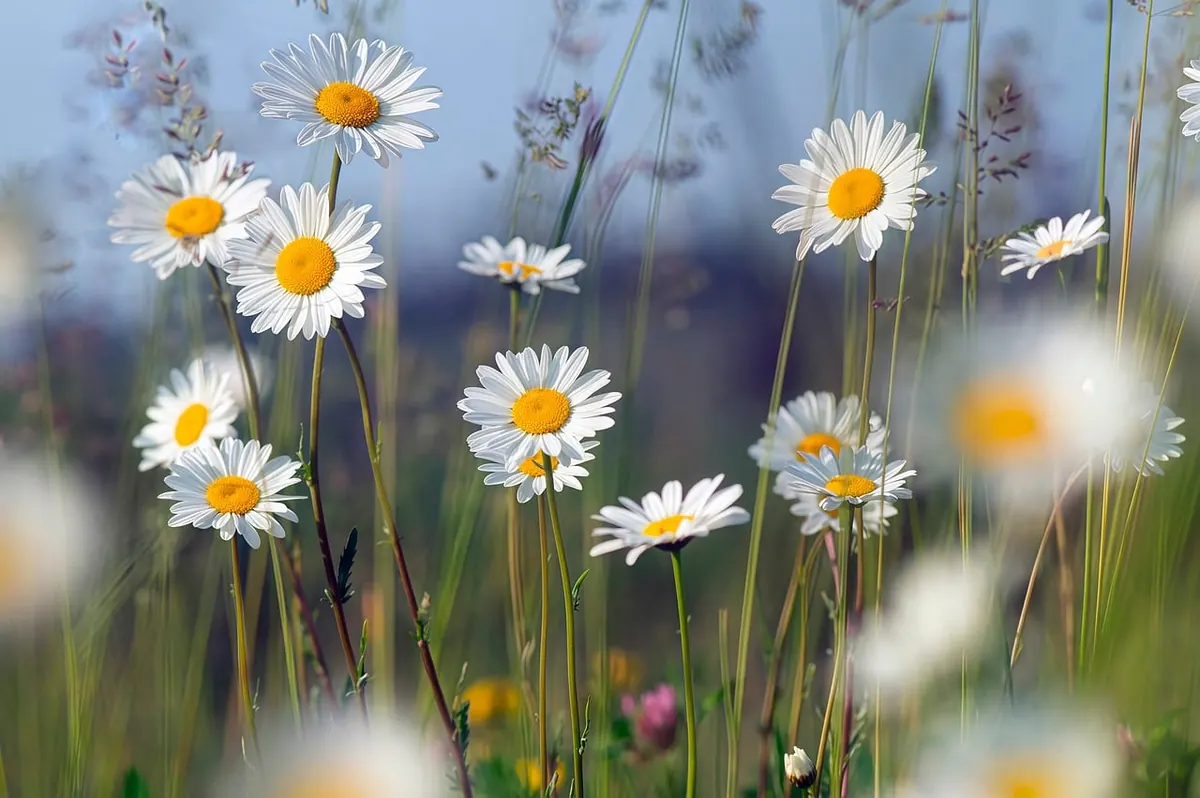
- Oxeye daisy (Leucanthemum vulgare) is a flat, open flower that short-tongued bees can use. It is easy from seed and happy in a container.
- Field poppy (Papaver rhoeas) gives pollen rather than much nectar, but pollen is valuable to bees rearing young. It is an annual, so let some seed drop.
High summer: July to August
- Yarrow (Achillea millefolium) has flat flower heads and tolerates drought. It is ideal for a sunny pot that dries out.
- Common knapweed (Centaurea nigra) looks like a thistle but is soft and nectar-rich. It attracts bumblebees, solitary bees and butterflies.
- Viper's bugloss (Echium vulgare) is a biennial with vivid blue flowers that bees seem unable to ignore. It needs sharp drainage.
- Wild marjoram (Origanum vulgare) is compact enough for a window box and flowers for months. It is one of the best all-round bee plants.
- Betony (Stachys officinalis) sends up spikes of purple flowers that are popular with bumblebees. It prefers a little shade and not too much richness.
- Borage (Borago offic
Photo: RuslanSikunov / Pixabay